




Berkshire Hathaway Annual Letter: Greg Abel Edition
For the first time in our life times Warren Buffet was a spectator at the annual meeting of shareholders for Berkshire Hathaway. Greg Abel and Ajit Jain took to the stage to field questions and discuss business operations.
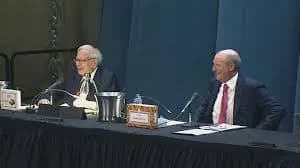
For the first time in our life times Warren Buffet was a spectator at the annual meeting of shareholders for Berkshire Hathaway. Greg Abel and Ajit Jain took to the stage to field questions and discuss business operations. While the meeting is a bit of a spectacle I find reading the annual letters to be of great utility. I have to admit that I have become accustomed to Buffet's writing style and I assumed anyone else that took over the duty of the annual letter would likely fall short of my lofty expectations - I was wrong.
Greg Abel authored the 2025 Annual letter and I enjoyed it. There were a few takeaways from the letter that I thought were worth discussing. The first is the culture section Abel wrote that was essentially quotes from a private email he sent out to the business. In this section he talks about why Berkshire exists, the values it promises to uphold and a myriad of other topics. First off I do think culture in a business if vitally important and Abel's job is going to be to uphold those values long after Buffet is gone - if he can do that the business becomes far simpler to run I would argue.
From a business specific standpoint he speaks to the decentralized model and the importance of individual responsibility focused at the subsidiary level. While I think this is a great business model I think it applies more to large conglomerates more than it should be applied to M&A we might see in businesses we own. In the day to day M&A is done to structurally improve value to the acquirer and it is not always true that existing management should remain in place. I think the point I would make here is yes for Buffet and Berkshire the decentralized model is great but for the businesses you own if they do M&A that ends up being integrated or consolidated I would not be so quick to knock them for that - the circumstances and reasoning for the M&A are wildly different.
In 2011 Buffet said that the minimum capital Berkshire would hold is $10B with $20B being preferred - today that number sits at $370B and $176B in insurance float. Not many companies on the planet can enjoy a position like this but there are lessons we can glean from Berkshire's current position. The first is that businesses that are ran by founders/insiders that think in decades/generations are going to sacrifice returns in the short term to remain flexible when a down turn eventually comes. Berkshire sees itself as an asset of the US Federal Government and you can bet that if/when our economy goes into a spiral they will be there to cut checks and take over businesses at a fraction of their true value - as they did in 2008.
While the market tries to figure out if Berkshire's stock price will grind higher in the short term what is more interesting is what Abel decides to hone in on in business operations - I would suggest that as an owner in a stock you should behave the same way. Rather than talking about where the market might be next quarter, or focusing on the war news, Abel points to things like the expansion of BNSF operating margins, the average savings a BHE customer gets vs the industry benchmark rates, the quality of the in-store experience at Pilot etc.
In other words, I would suggest everyone of us stop and think about businesses a little more like Greg Abel rather than letting the flow of news and funds warp us into getting caught up in the flood of information and news cycles.
Disclaimer
Everything Money is Not an Investment Advisor: Everything Money (including Paul, Mo, and Any other person including, but not limited to, other staff members, guests, personalities, etc.) is not an investment adviser, and it is not registered as such with the U.S. Securities & Exchange Commission or any other state or federal authority under the Investment Advisers Act of 1940 or any other law. The investments and strategies discussed in Everything Money’s YouTube videos and on Everythingmoney.com are not and should not be considered investment advice and may not be suitable for you. They do not take into account your particular investment objectives, financial situation, needs, or personal circumstances and are not intended to be specific to you. Before acting on any investment or strategy discussed, you should always do your own research and make your own independent decision about whether it is suitable for your particular circumstances. You should also consider seeking advice from your own legal, financial, tax, accounting, or investment advisers. Everything Money does not provide such advice.
READ THE FULL DISCLAIMER HERE: https://everythingmoney.com/disclaimer